Promoting and preserving indigenous cultures
After 1969...his interests...began to shift towards a more humanist appreciation of traditional Aboriginal society as well as the formal management of its cultural heritage...
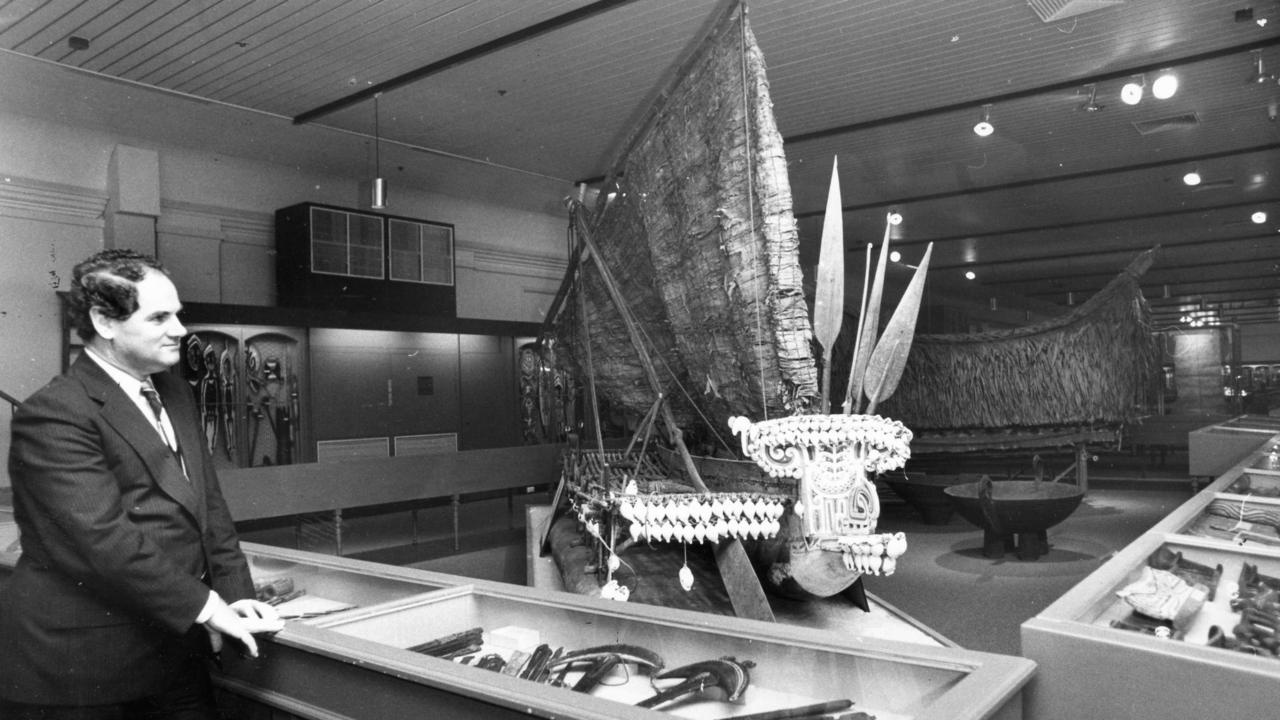
A Paradigm Shift
"I believe it was through this fieldwork and the exposure to the traditional owners of country that he was working in that Bob reached a realisation relating to what could be done with cultural material, particularly in Australia.
He began with site recording and working with a group of traditional owners who had rights in areas such as Mount Singleton and the Cleland Hills, the Yuendumu district, Warlpiri and Pintupi people and later Pitjantjtatjara people when he went further south to the Officer Creek region near Ernabella. It was at that latter area in July 1969 that Bob found himself drawn in to closer relationships with these people. He was recording a little bit of mythology. He was being invited to ceremony going through the night and then working with those same people documenting rock art during the day."
I believe it was from this point that Bob realised that the only way to record and document Aboriginal sites properly and to extend this approach to heritage management as a whole was in a total partnership, honest and complete, with the Aboriginal owners of the sites and the material.
It was a paradigm shift that distinguished him from possibly the Draper Campbells, Charles Mountfords and Harold Coopers who had essentially adopted the traditional museological approach to culture; that is, an expert-driven approach, scooping up the material bringing it in and processing it.
It was this and the UNESCO seminar that he organised in Adelaide in 1971, which brought people together from all over the country concerned with preservation of Aboriginal art, that equipped him for making the next shift in his career."
From: Philip Jones. NMA Tribute Day, "Early curatorial career at the South Australian Museum," 22 March 2011.
Pioneering Museum Practice
"At the SA Museum, he drew on his contacts with senior men in the APY lands to develop a keeping place in the basement of the SA Museum, where Aboriginal elders could inspect their secret-sacred objects. This was the first time that any museum had done this."
From: Smith et al. "Robert Edwards and the history of Australian rock art research." September 2020, Historical Records of Australian Science 32(1) 2021.
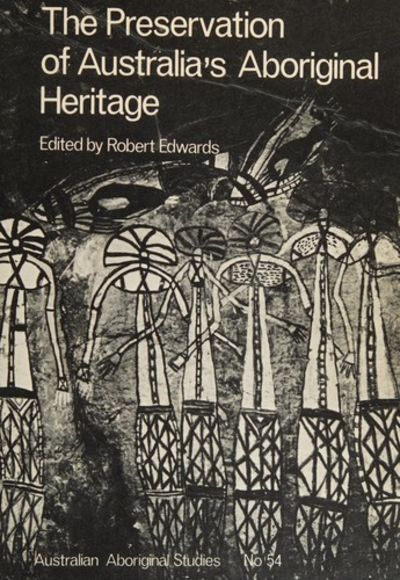
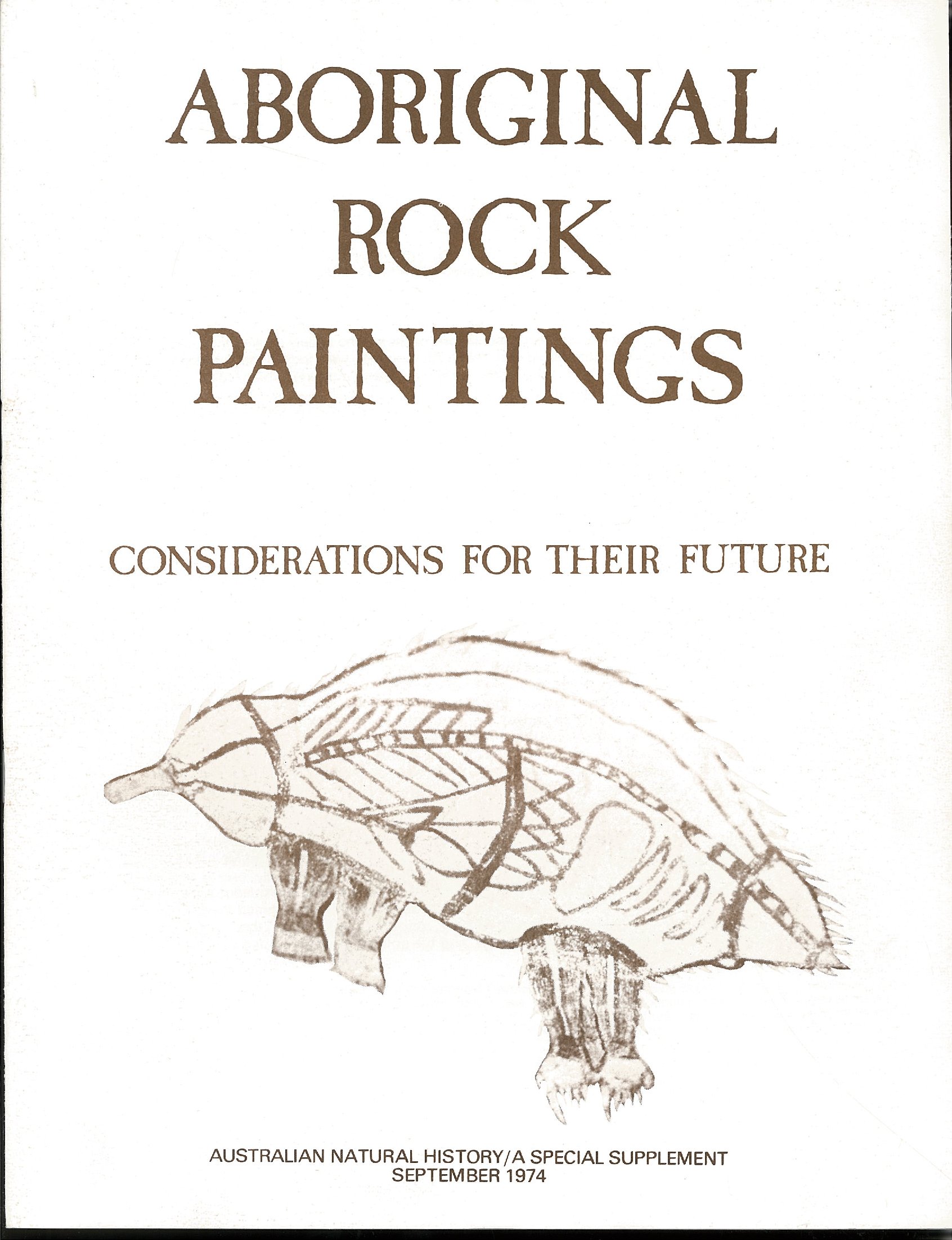
In May 1972, Edwards convened the National Seminar on Aboriginal Antiquities in Australia in Canberra, addressing the growing need to protect Aboriginal relics from destruction caused by development and tourism.
Discussions ranged from the preservation of rock art in the Pilbara to the deterioration of archaeological materials and the need for public education on site conservation — with the seminar becoming a rallying point for advocates pushing for comprehensive, uniform heritage legislation across Australia's states and territories.
The proceedings were published as The Preservation of Australia's Aboriginal Heritage, offering recommendations for state and federal governments on how to better manage, record and protect sacred sites — part of a broader effort throughout the 1970s to establish legal frameworks for heritage protection, closely tied to landmark laws such as the Aboriginal Heritage Act 1972 in Western Australia.
From: Edwards, R. (ed.) "The Preservation of Australia's Aboriginal Heritage." Canberra: Australian Institute of Aboriginal Studies, 1975.
Shaping National Policy from Canberra (1973-1975)
As Deputy Principal of the Australian Institute of Aboriginal Studies, Edwards spent two intensive years in Canberra during which he conducted major fieldwork, set new institutional standards, and contributed to two of the era's most consequential government inquiries — all at once.
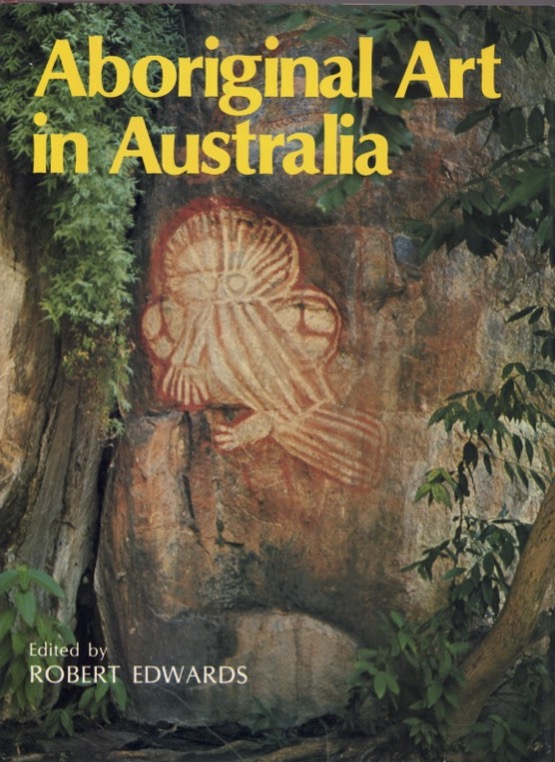
In 1973, Edwards was commissioned by the Commonwealth to carry out a survey of rock art in Western Arnhem Land as part of the Alligator Rivers Environmental Fact-Finding Study, in the lead-up to the establishment of Kakadu National Park. This body of work effectively marked the end of his focused rock art research, as his career then shifted substantially toward cultural diplomacy, site management and heritage.
Edwards' survey was later published as: Australian Aboriginal Art: The Art of the Alligator Rivers Region, Northern Territory (Australian Institute of Aboriginal Studies, 1979).
"Bob got sucked into work on the rock art in the Alligator Rivers region as part of the Alligator Rivers Environmental Fact Finding Study, the lead-up to the establishment of Kakadu National Park."
From: Mike Smith. NMA Tribute Day, "Bob Edwards: museums and archaeology" panel, 22 March 2011.
_____________________________________________
Alongside this fieldwork, Edwards also drew up some of the first guidelines for dealing with restricted secret-sacred materials held in institutional collections.
"John Mulvaney, chair of the Institute at that time, called a very important meeting about access to the field, which laid the foundation for much more ethically aware research behaviour and the whole basis for working around the secret and sacred in Aboriginal Australia. Bob was asked to draw up some of the first guidelines for the Institute about the restricted materials and how to deal with them."
From: Nic Peterson. NMA Tribute Day, "Bob Edwards: museums and archaeology" panel, 22 March 2011.
_____________________________________________
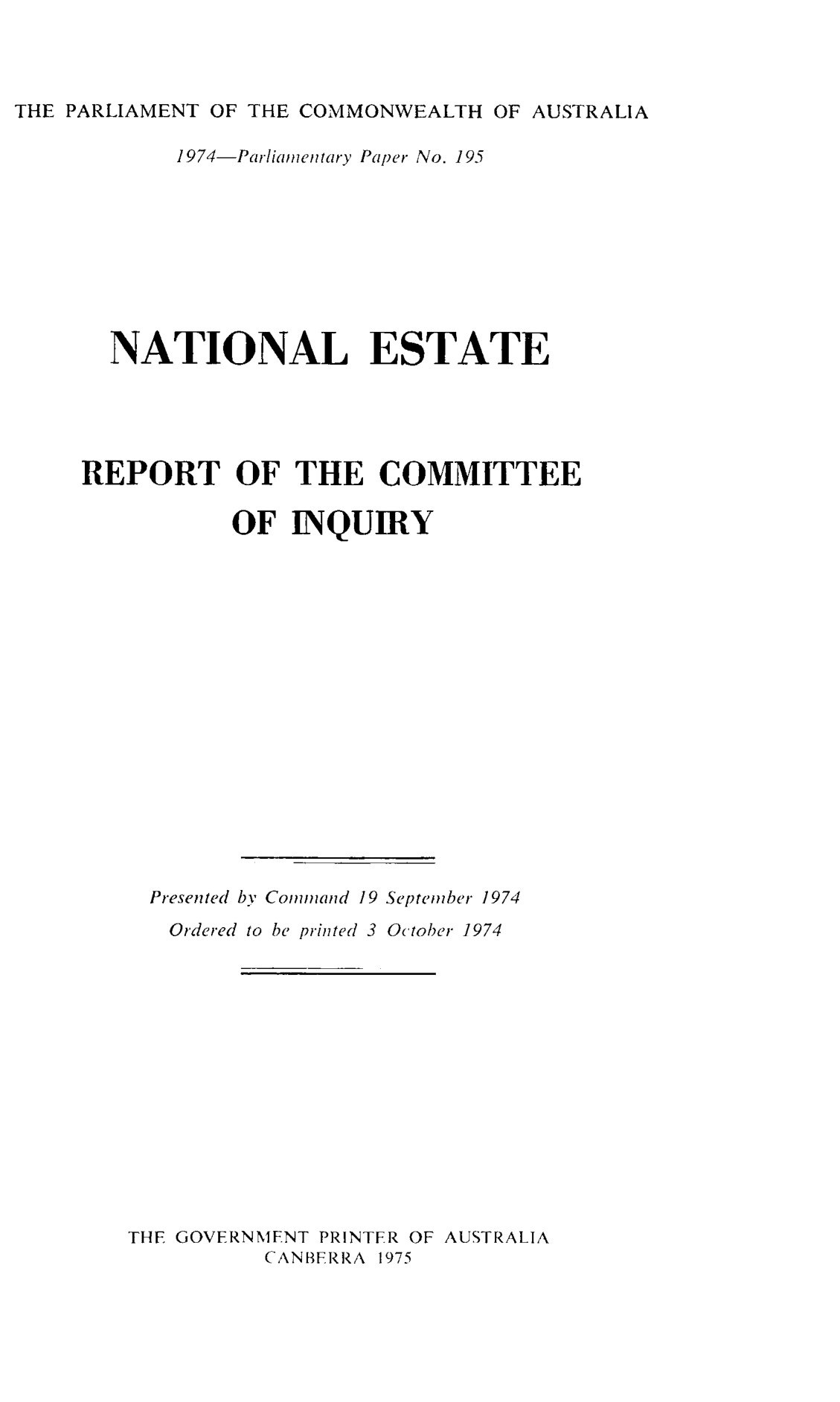
Contributor to the 1974 Report of the Committee of Inquiry into the National Estate (Hope Report). A landmark Australian document that redefined environmental and cultural heritage conservation as a public responsibility. It argued that conservation was not a "middle-class" issue but a necessity for all, proposing the protection of natural landscapes, indigenous sites, and historic buildings.
"...he was a contributor to the 1974 Hope enquiry that was commissioned by the Whitlam government to investigate the extent and condition of the national estate. This report led to the formation of the Australian Heritage Commission in 1975. He continued his role as one of the authors...into the formation of a gallery of Aboriginal Australia, as part of the Pigott Inquiry into museums and national collection."
From: Smith et al. "Robert Edwards and the history of Australian rock art research." September 2020, Historical Records of Australian Science 32(1) 2021.
____________________________________________
Contributor to the 1975 "Museums in Australia" report (Pigott Report), a landmark Committee of Inquiry that reviewed Australian museums, urging a major overhaul of cultural heritage management. It highlighted the poor condition of collections and recommended creating a National Museum of Australia, a national maritime museum, and a commission to improve funding, education, and conservation. While a member of the Aboriginal Arts Board (1975–80), Edwards continued to push for the Pigott Report's vision of a national museum, lobbying ministers alongside colleagues such as John Mulvaney.
When the National Museum's Interim Council was formed in 1980, Edwards was offered the directorship — but within days the appointment went to Peter McMichael instead. Edwards went on to become founding director of the Museum of Victoria in 1984, later chaired the National Museum of Australia's governing Council (1990–96) and the National Portrait Gallery (1997–2000) as its first Chair, sat on the boards of the Ian Potter Museum, the South Australian Museum, and the Stockman's Hall of Fame, and was made an Honorary Fellow of both the National Museum of Australia and Museum Victoria.
From: "Committee of Inquiry on Museums and National Collections. Museums in Australia 1975: Report of the Committee of Inquiry on Museums and National Collections, including the Report of the Planning Committee on the Gallery of Aboriginal Australia." Canberra: Australian Government Publishing Service, 1975.
____________________________________________
UNESCO Regional Seminar on the Role of Museums in Preserving Indigenous Cultures
Building on a smaller gathering Edwards had organised in Adelaide earlier in the decade, in September 1978 he convened the UNESCO Regional Seminar on the Role of Museums in Preserving Indigenous Cultures — a landmark event that transformed the relationship between museums and Indigenous communities.
It was the first report of its kind to establish the rights of Indigenous peoples to control their own cultural heritage, and it set the standard that would shape museum-Indigenous relations for decades to come.
The seminar marked a genuine shift in approach, moving museums away from passive curation and toward active collaboration — recognising that knowledgeable Indigenous custodians, not museum professionals alone, should determine how their own traditions were preserved. It was later described as the first, and most definitive, record of the wishes of Aboriginal and Torres Strait Islander peoples regarding how they wanted museums to develop, with a clear call for Indigenous representation in senior management.
Though centred on Australia, the seminar's influence reached further still: delegates from New Zealand, Papua New Guinea and New Caledonia carried its ideas home, shaping museology practice across the wider Pacific. Its recommendations also laid much of the groundwork for the repatriation of Indigenous cultural heritage that would gather pace in the decades that followed.
From: Edwards, Robert, and Jenny Stewart, eds. "Preserving Indigenous Cultures: A New Role for Museums — Papers from a UNESCO Regional Seminar, Adelaide, 10–15 September 1978." Canberra: Australian Government Publishing Service, 1980. (Sponsored by the Australian National Commission for UNESCO and the Aboriginal Arts Board of the Australia Council.)