
A Transformative Commitment to Aboriginal and Torres Strait Islander culture
Edwards’ initial fieldwork documenting rock art and stone tools evolved into a profound recognition of Aboriginal heritage as a "continuing, living culture".
This paradigm shift defined his career, particularly during his time as the Founding Director of the Aboriginal Arts Board (AAB), where he ensured Indigenous voices and agency were paramount.
He was instrumental in providing government support for First Nations arts, leading initiatives like copyright protection and establishing art centers within communities.
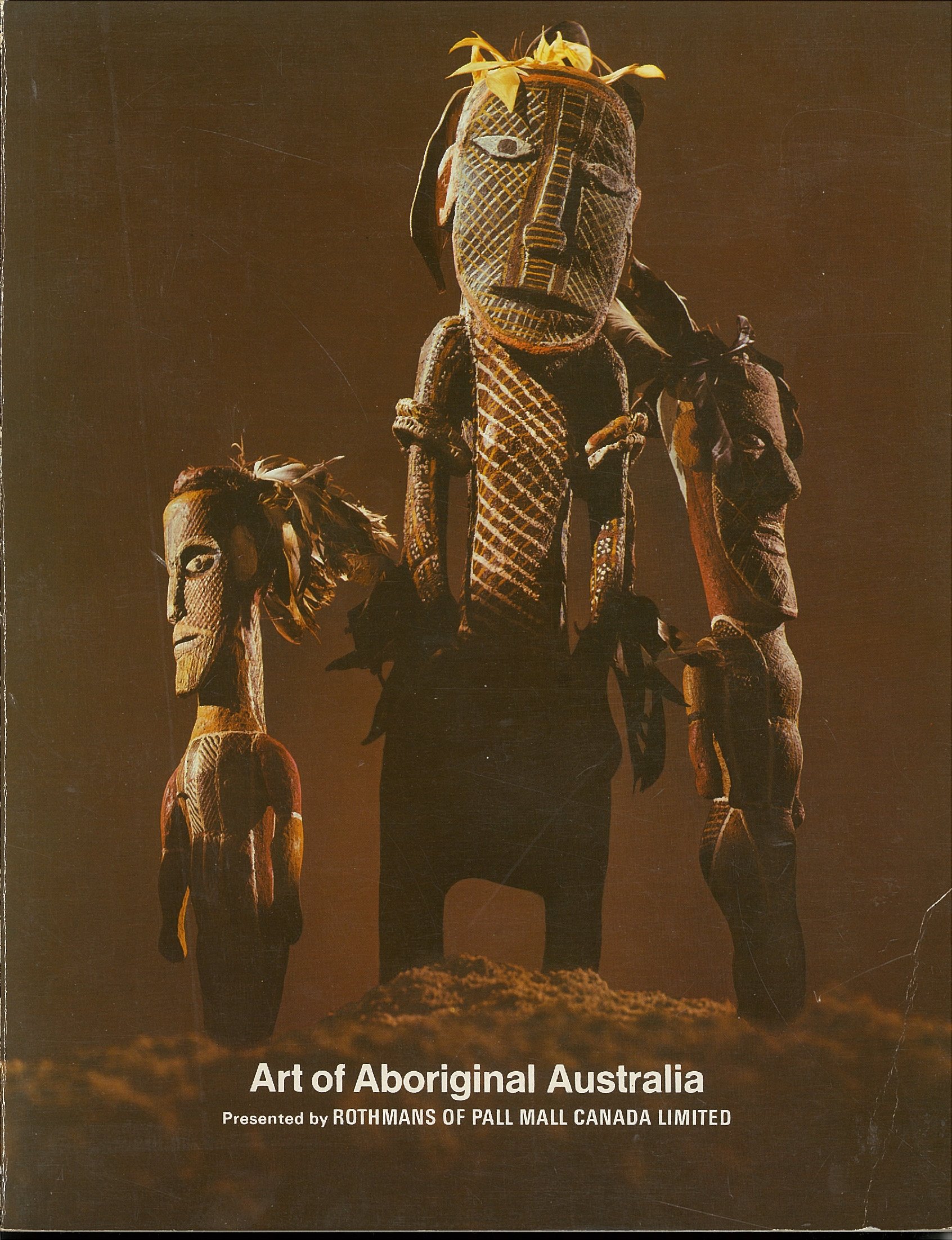
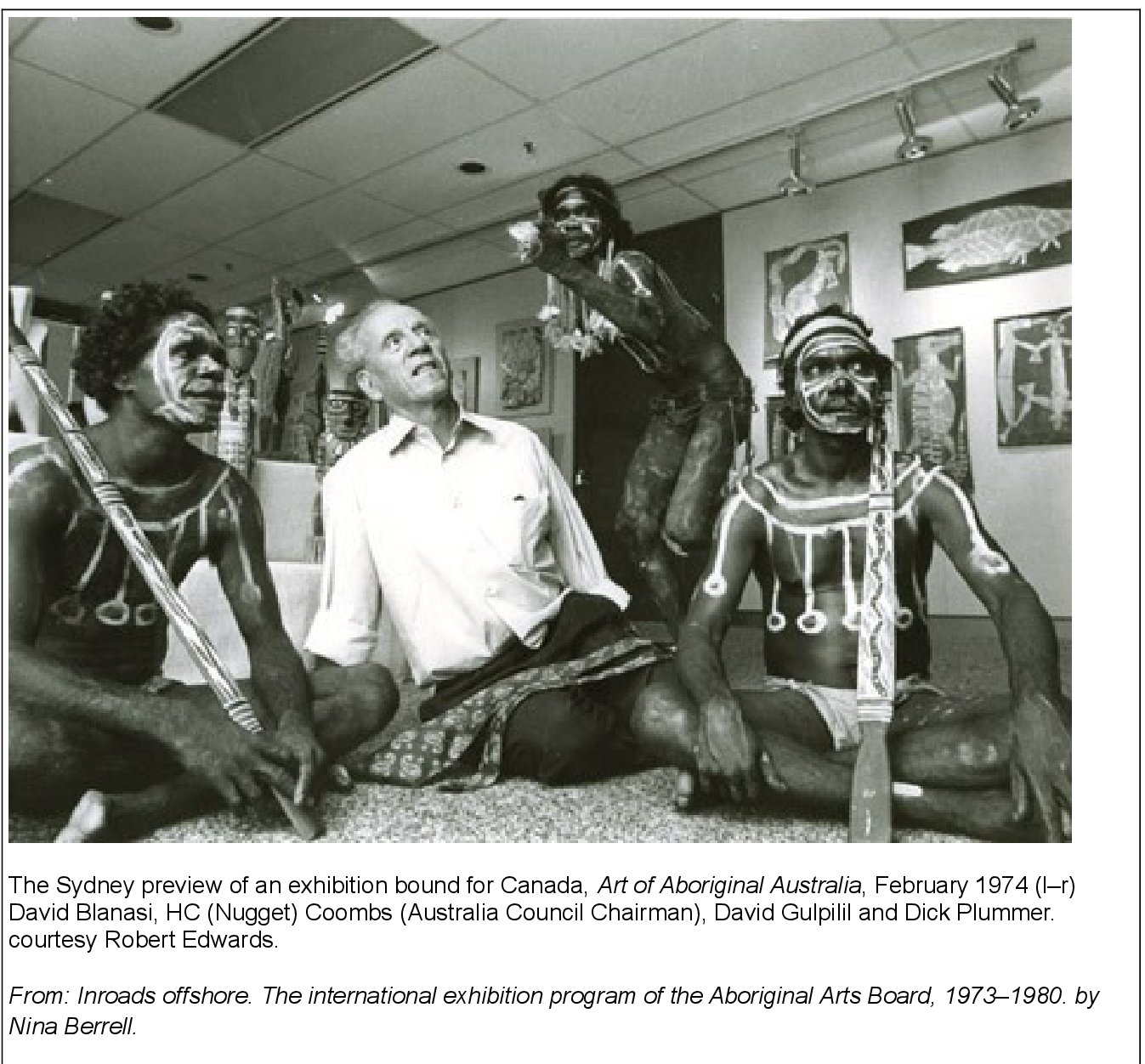
His promotion of Aboriginal art overseas, dubbed the "Inroads offshore" program, was considered one of the "most subtle and brilliant marketing exercises" in Australian art history, transforming how the world perceived works like the Papunya Tula paintings.
" He was Director of the AAB during a period which saw the greatest expansion of Government support for Indigenous arts ever. Many of the early projects and causes he helped initiate, champion, and support have formed the backbone of First Nations arts and cultural support at Council since.
Such projects include copyright in Indigenous art works, the establishment and ongoing support of arts centres within communities, Australian involvement in the Festival of Pacific Arts, and the commissioning, funding and delivery of major overseas tours of collections of Aboriginal art.
Indeed, for many, Edwards and his strong, all-Indigenous Board that was balanced between remote and urban First Nations artists, emerged as the saviours of the nascent Aboriginal art movement at Papunya. For while boards and canvases were pouring out from the twenty-odd 'Painting Men' in the township, 70% of them were ending up in the AAB's storerooms. As no local Gallery would accept them as art, the only answer was international exposure. By the early 1980's there had been twenty exhibitions in 40 countries in Africa, Asia, Europe, North and South America and the Pacific Islands.
In retrospect, Edwards claimed that the program was perhaps "one of the most subtle and brilliant marketing exercises" in the history of Australian art.
He also created a longer-term boon in the establishment of the Aboriginal Artists Agency - still going. This pursues copyright for First Nations artists where images of their work appear in books, catalogues, films and TV."
From: Jeremy Eccles. "A Significant Loss – Bob Edwards 1930-2023." Aboriginal Art Directory, 6 June 2023.
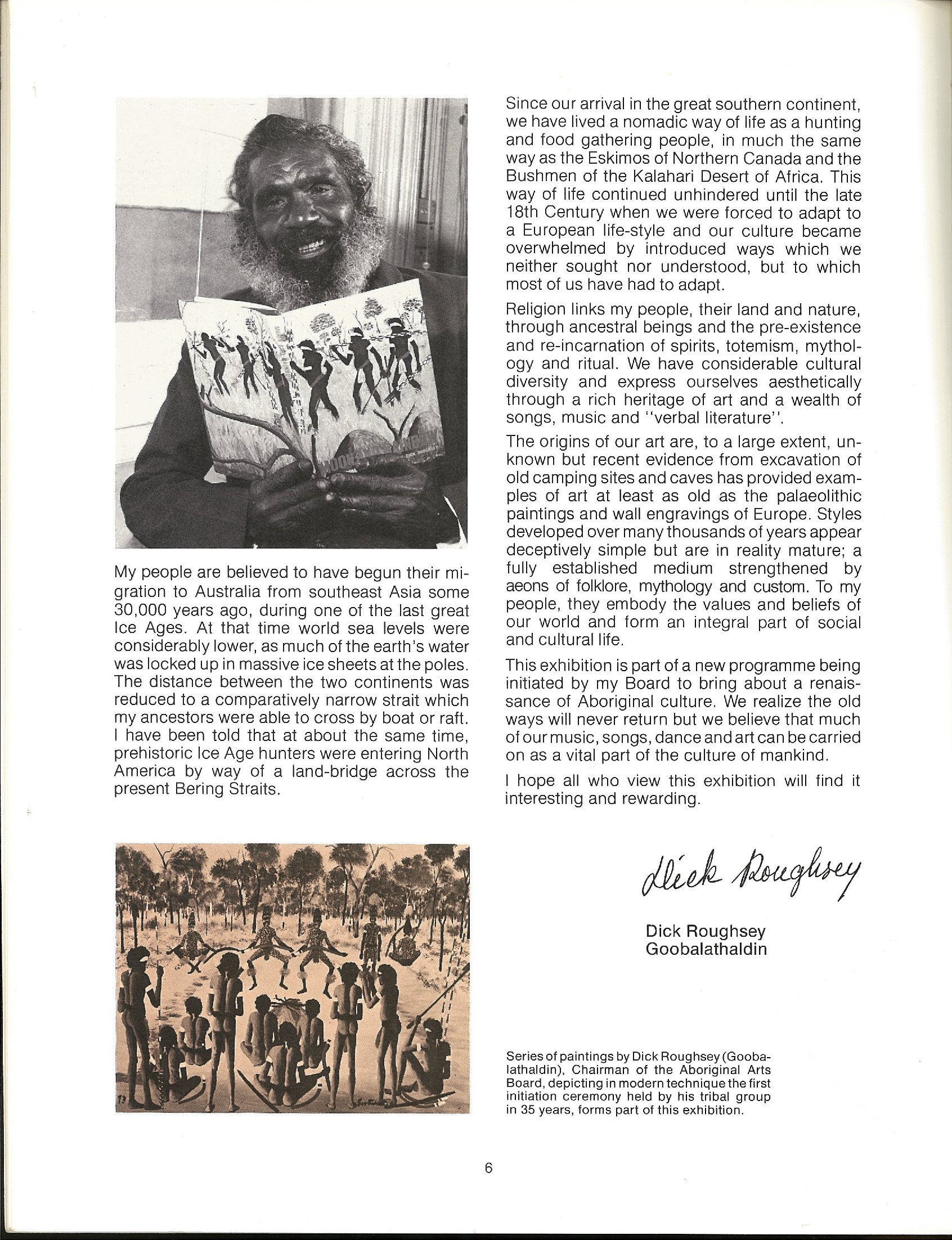
"...becoming the inaugural Director of the Aboriginal Arts Board of the Australia Council in 1975. Edwards was working with an all-Indigenous board, chaired by great artists, first Dick Roughsey and then Wandjuk Marika, often meeting on Country.
For this was the time when First Nations first discovered their voice, as Gough Whitlam had proclaimed in 1973: " The decision to place control for the arts in the hands of Aboriginals is intended to stimulate indigenous Australian arts and lead to the preservation of many art forms almost lost since the settlement of Australia by Europeans."
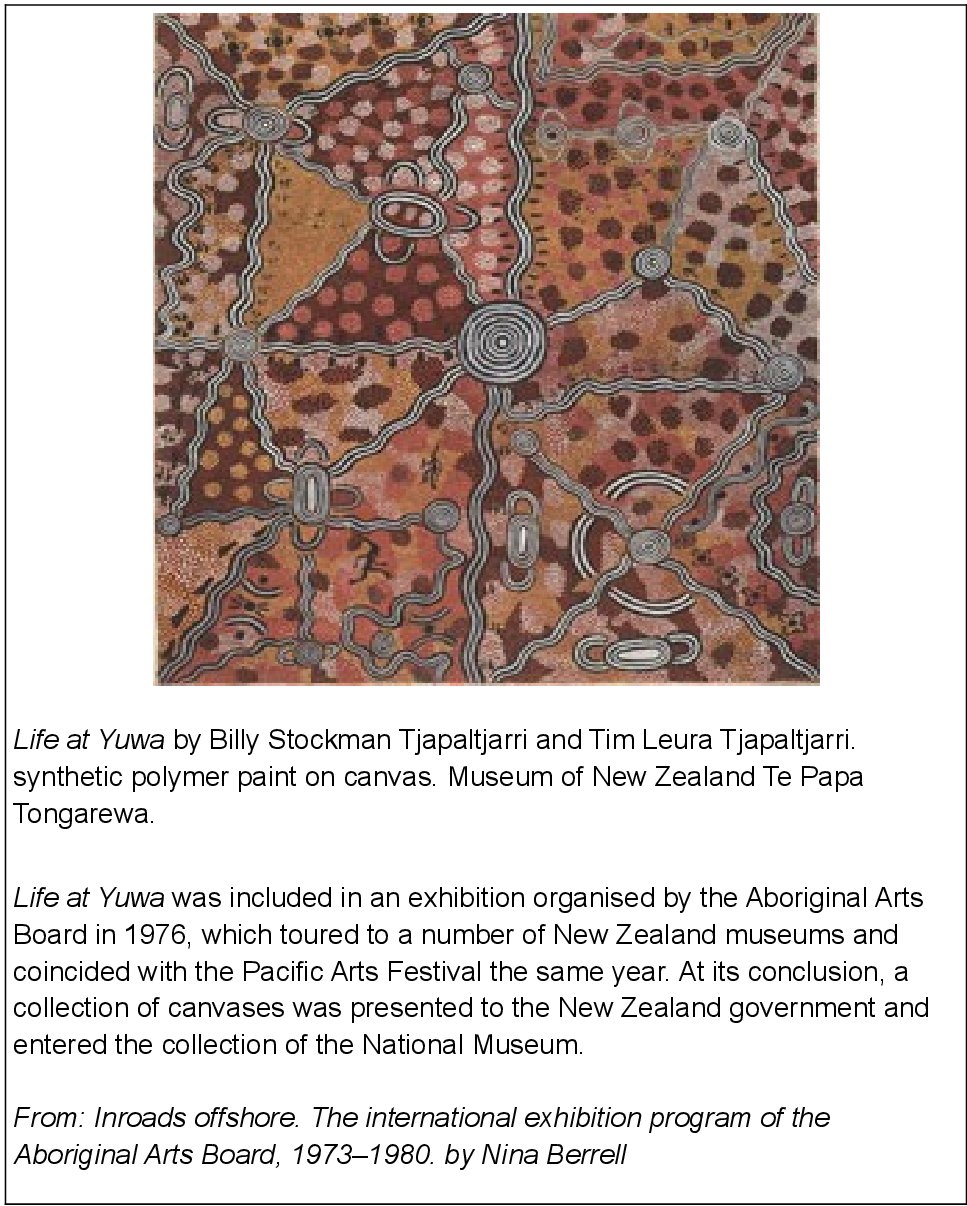
But it took their non-Indigenous director to work out what to do with the piles of boards and canvases flowing out of Papunya. As no domestic gallery would accept them as art, the only answer seemed to be international exhibitions. By the early 1980's the board had initiated twenty exhibitions in 40 countries...
For the works weren't seen as ethnography. Paintings by Billy Stockman Tjapaltjarri in New Mexico were described by the New York Times as "complex pointillist abstractions that would look right at home in New York's Museum of Modern Art."
Edwards had chosen them for their aesthetic appeal. And it was estimated that more than 10 million people visited those exhibitions staged around the world."
From: Jeremy Eccles. "Art facilitator who took recognition of Indigenous culture to a new level." The Sydney Morning Herald, 13 June 2023.
Billy Griffiths
(Deep Time Dreaming, Black Inc, 2018.)
"...He saw his role as a means to involve and empower Indigenous voices in national life. The arts, he believed, were the key to changing attitudes towards Indigenous people and their heritage."
Art Gallery of South Australia
(AGSA Magazine, Issue 52, Spring 2023.)
"Edwards was key to global and national recognition of Aboriginal art, and he broke ground in post-colonial Australia by elevating Aboriginal culture to its rightful place as an integral part of the nations heritage."
Dawn Casey PSM FAHA
(Written message read by Philip Jones at the funeral of Bob Edwards, St Mary's Church, 14 June 2023.)
"His achievements were never about himself but for the recognition of Aboriginal people's profound understanding of land and sea, their skill with tools and weapons, their spirituality, languages and kinship systems and their art. Bob wanted Australians to appreciate they were encountering a complex, ancient, sophisticated and enduring culture."
Neil MacGregor
(Written message read by David Edwards at the funeral of Bob Edwards, St Mary's Church, 14 June 2023.)
"Bob opened my eyes — and ears — to a way of studying and honouring indigenous traditions and achievements which was quite new to me. I had quite simply never heard anybody talk like that before. And when he arranged for me to go to Arnhem Land, to visit communities and to look at rock art with the experts in the field, he opened a new world for me, which shaped much of what I was later able to do at the British Museum."