Curator and Archaeologist
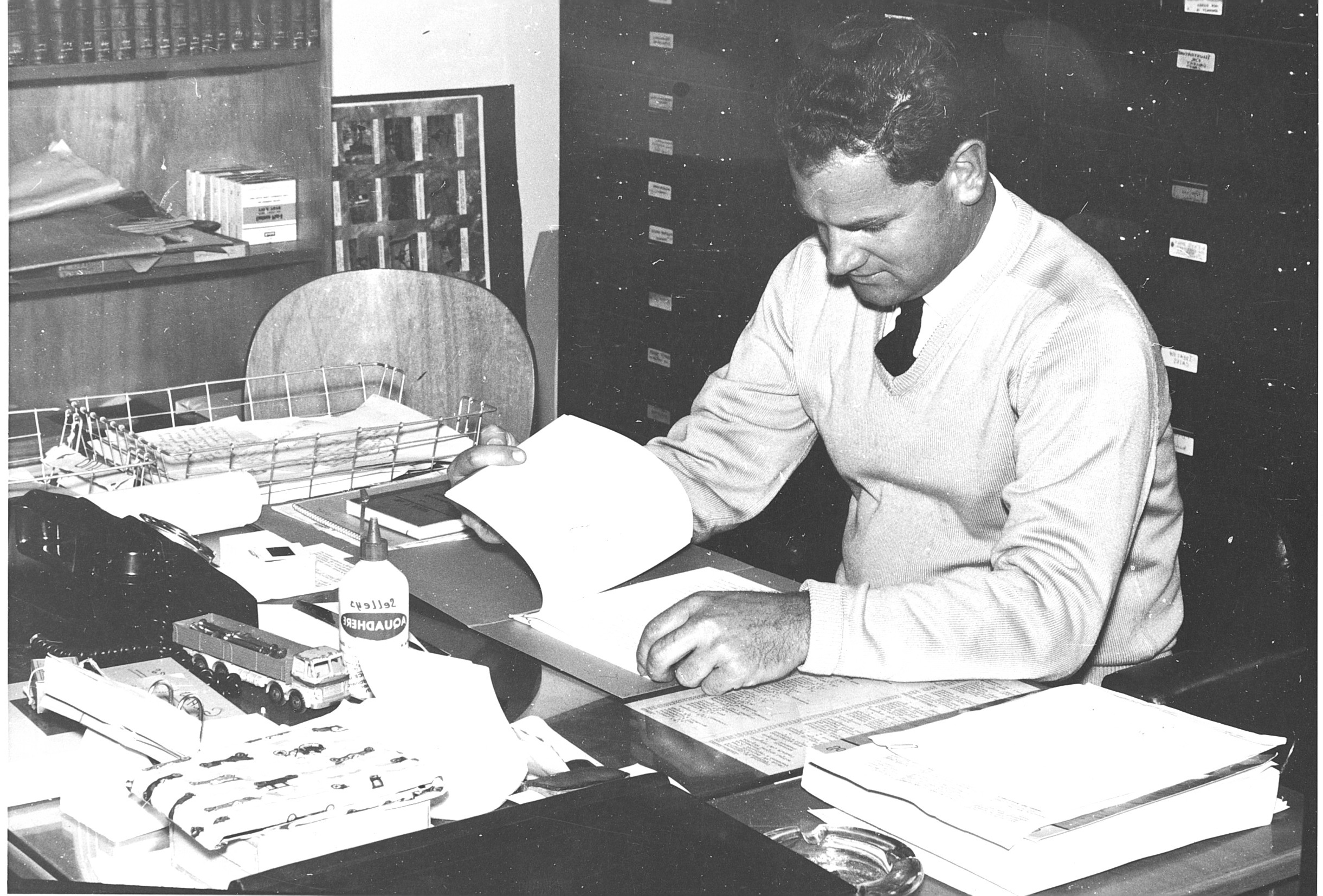
Bob Edwards was a pioneer of systematic rock art research and archaeology — a photographer, film maker, author and educator who spent his career working to deepen Australians' understanding of Aboriginal rock art and cultural heritage. That story begins in 1965, when he was appointed Curator of Anthropology at the South Australian Museum.
"He was responsible for the new concept of the Museum of Victoria; he played a central role in redeveloping the Museum of South Australia, the Museum of Western Australia, the Hong Kong Museum of History. He was the founding chairman of the National Museum of Australia and the founding chairman of the National Portrait Gallery.
I don't think there can be in any other country a man who has played so many parts in creating and re-creating museums....done by building those alliances and the friendships, persuading and encouraging people to work together."
From: Neil MacGregor, "A Tribute to Bob Edwards." National Museum of Australia, 22 March 2011.
Curator of Anthropology South Australia Museum
This was a role he stepped into from a career on the land rather than academia, arriving, in Philip Jones's account, to a museum in "parlous condition" and into the company of some formidable personalities.
"He arrived...in 1965 in his mid-30's having had a career...as a fruiterer and green-grocer, if you like, an orchardist and a man of the land. In the museum...he found himself rubbing shoulders with tall poppies in the SA cultural sphere: TD Campbell, Charles Mountford; Norman Tindale and Ted Strehlow - these were big names and big egos.
The museum itself was in parlous condition and remained in that condition for several years.
Stone Implements
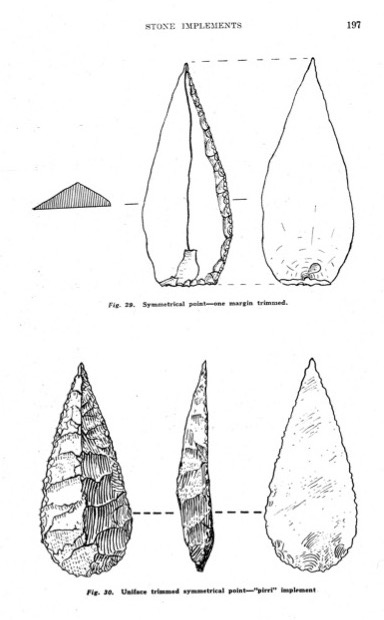
One of the mainstays of the group was Harold Cooper...an amateur stone tool collector. Through Cooper and Campbell in particular, Bob familiarised himself with the whole suite of Aboriginal stone tool technology and then went out into the field looking for it and documenting it."
From: Philip Jones. "A Tribute to Bob Edwards." National Museum of Australia, March 2011.
Rock art and engravings
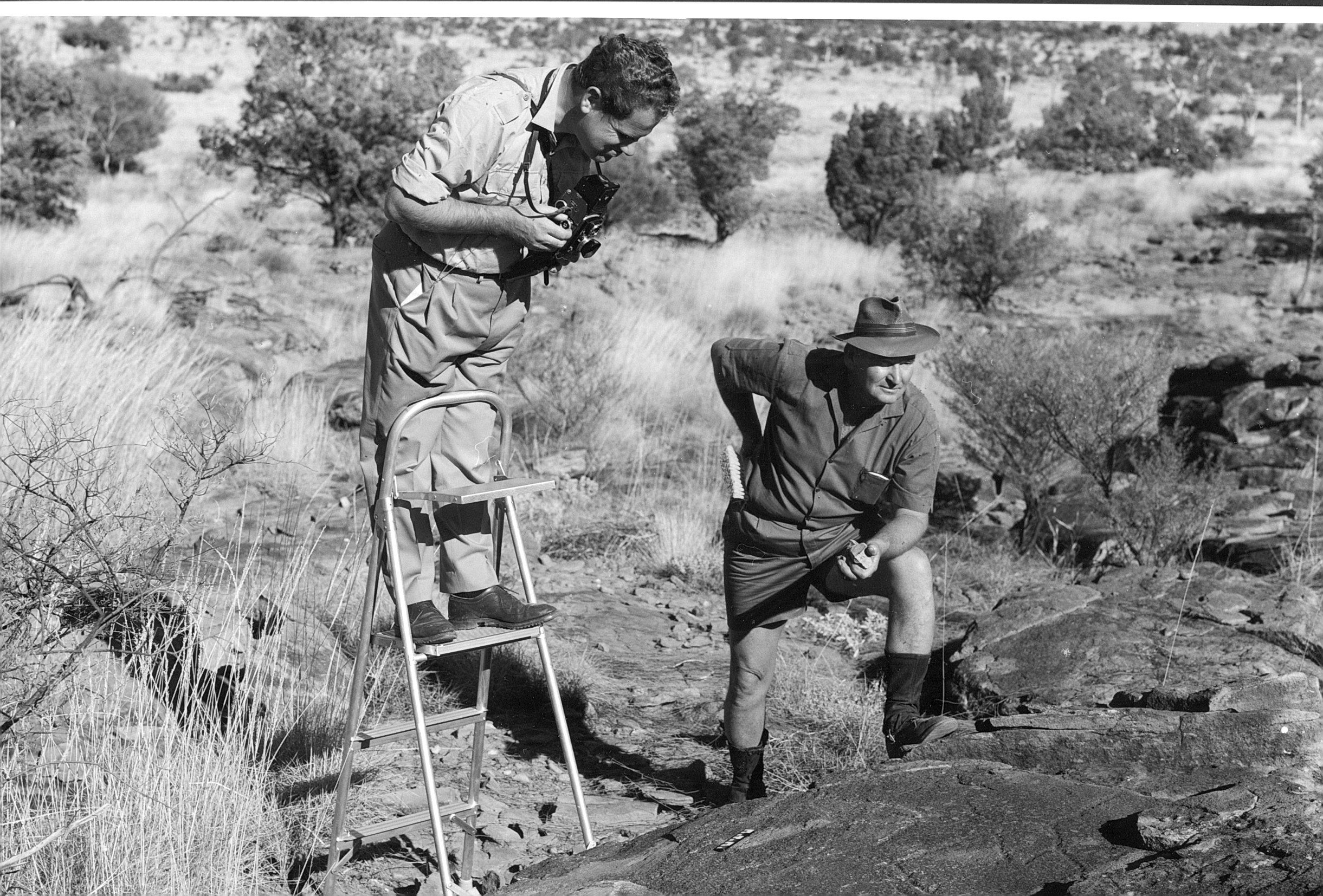
It was from this base that Edwards began the work that would define his career: a systematic, photographically documented survey of Aboriginal rock art across the country.
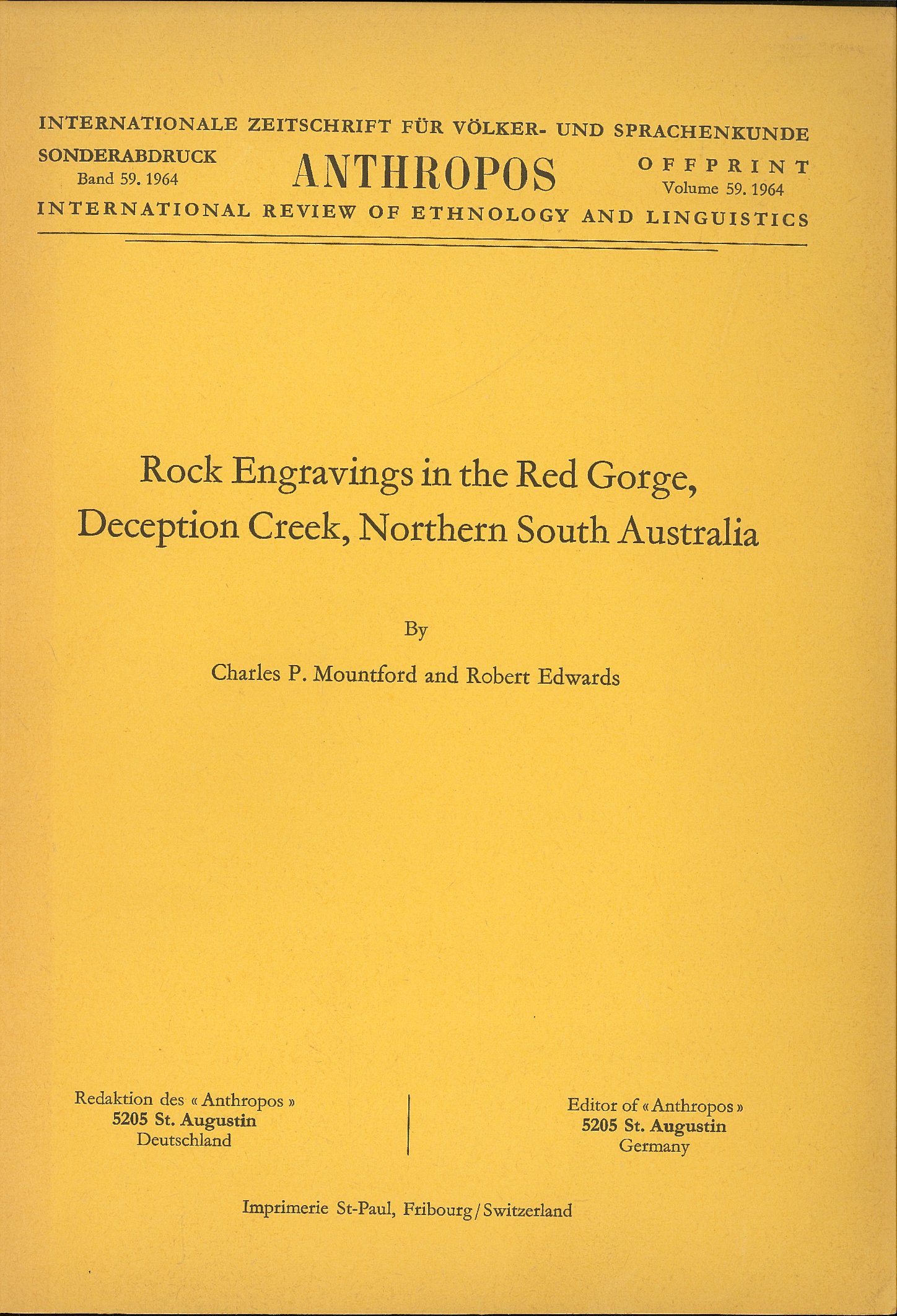
"With guidance from Charles Mountford and Draper Campbell he became a meticulous recorder of Aboriginal sites, focusing particularly on four main categories of Aboriginal heritage, and accumulating precisely documented photographic archives in the process. Rock engravings in north-eastern South Australia had been partially recorded, but during the 1960's Edwards began a comprehensive survey, accompanying Mountford on several expeditions resulting in a series of important, illustrated publications.
As the archaeologist Dr Mike Smith has put it, this was 'the first quantitative analysis of ancient desert rock engravings'. Edwards adopted a similar approach to his broader survey of rock paintings and engravings through Central Australia, the Kimberley, Arnhem Land, and other sites in Tasmania, Queensland, Victoria and South Australia.
From: Smith, M.A., Ross, J., and Kimber, R.G. "Robert Edwards and the History of Australian Rock Art Research." Historical Records of Australian Science 32(1), 2021, pp. 41–51.
His careful work enabled other researchers to begin the long process of comparative analysis of the various forms and styles of rock art, and to place these style shifts with a chronological framework. Edwards is rightly regarded as an Australian pioneer of systematic rock art research and archaeology.
His pioneering work at Koonalda Cave deep beneath the Nullarbor Plain in South Australia (1967), opened up the field of rock art and artistic expression to prehistorians in Australia, as did his collaborative work on dating rock art in Arnhem Land at Ingaladdi rock-shelter.
"The published report on his Alligator Rivers rock art survey (1974) became a key document establishing Kakadu as a national park, based on its indigenous heritage and natural history values."
From: Philip Jones. "Remembering Dr Robert Edwards AO (1930–2023)." South Australian Museum, 29 May 2023.
"In 1969, Bob Edwards received funding from the Australian newspaper to begin the huge project of systematically recording rock art across Central Australia. Over ten weeks, he travelled some 11,000 kilometres in a Land Rover that was not always reliable, visiting rock art sites in Central Australia, the Tanami Desert, the Anangu Pitjantjatjara lands, and the Blackstone Range in Western Australia.
He recorded the location of many significant sites including Puritjarra Cave...and deposited some 32,000 photos in the SA Museum collection.
Published as a six-part serial in The Australian, this hugely important expedition had great impact on the Australian public's appreciation of Aboriginal cultural heritage."
From: Claire Smith FAHA. "Dr Robert 'Bob' Edwards AO FAHA, 1930–2023." Australian Academy of the Humanities, 2023.
A list of Bob's own publications, 1962–1981, spanning his years at the South Australian Museum, the Institute of Aboriginal Studies and the Aboriginal Arts Board: Bibliography of Robert Edwards 1962 - 1981.
"Bibliography of Robert Edwards 1962 - 1981."
_________________________________________________
Canoe Trees
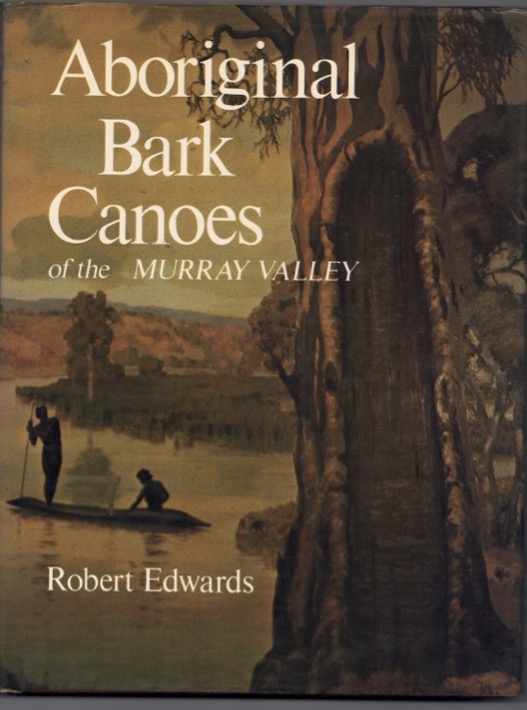
Along side his survey work, Edwards also turned his attention to heritage closer to home, launching a survey of the scarred canoe trees of the Murray Valley near Adelaide.
"The fourth body of work in the Robert Edwards 'South Australian period' was undertaken closer to Adelaide (around 1967); a comprehensive survey of the scarred canoe trees of the Murray Valley.
Many of these trees have now disappeared altogether, and once again, Edward's carefully assembled survey collection constitutes a vital, enduring record of this aspect of Australia's heritage."
From: Philip Jones. "Remembering Dr Robert Edwards AO (1930–2023)." South Australian Museum, 29 May 2023.
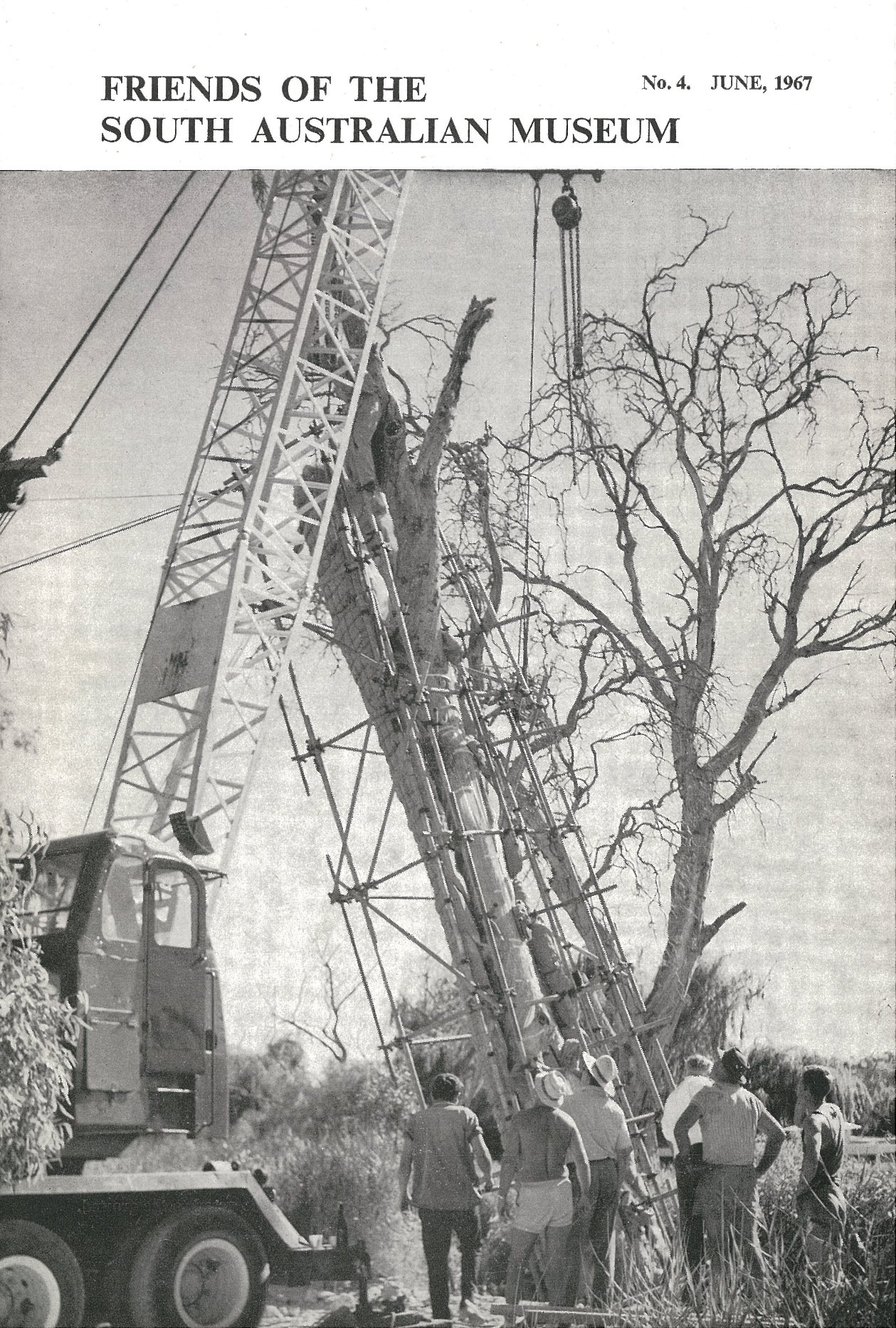
"The removal, on the 15th March 1967, of an aboriginal canoe tree from the banks of the River Murray at Mannum for preservation at the museum, is part of a plan to attract public attention to the need to preserve as many of these interesting relics as possible. After treatment the thirty-six feet long tree will be erected in the museum courtyard on North Terrace where it will serve both as a memorial to the River Tribes who made and used bark canoes for many centuries, and a constant reminder to the public to care for similar relics still standing along the banks of the River."
From: Robert Edwards, Curator of Anthropology. "A Unique Canoe Tree from Mannum, South Australia." Friends of the South Australian Museum, Newsletter No. 4, June 1967.
Creation of the Tjilbruke Dreaming Track
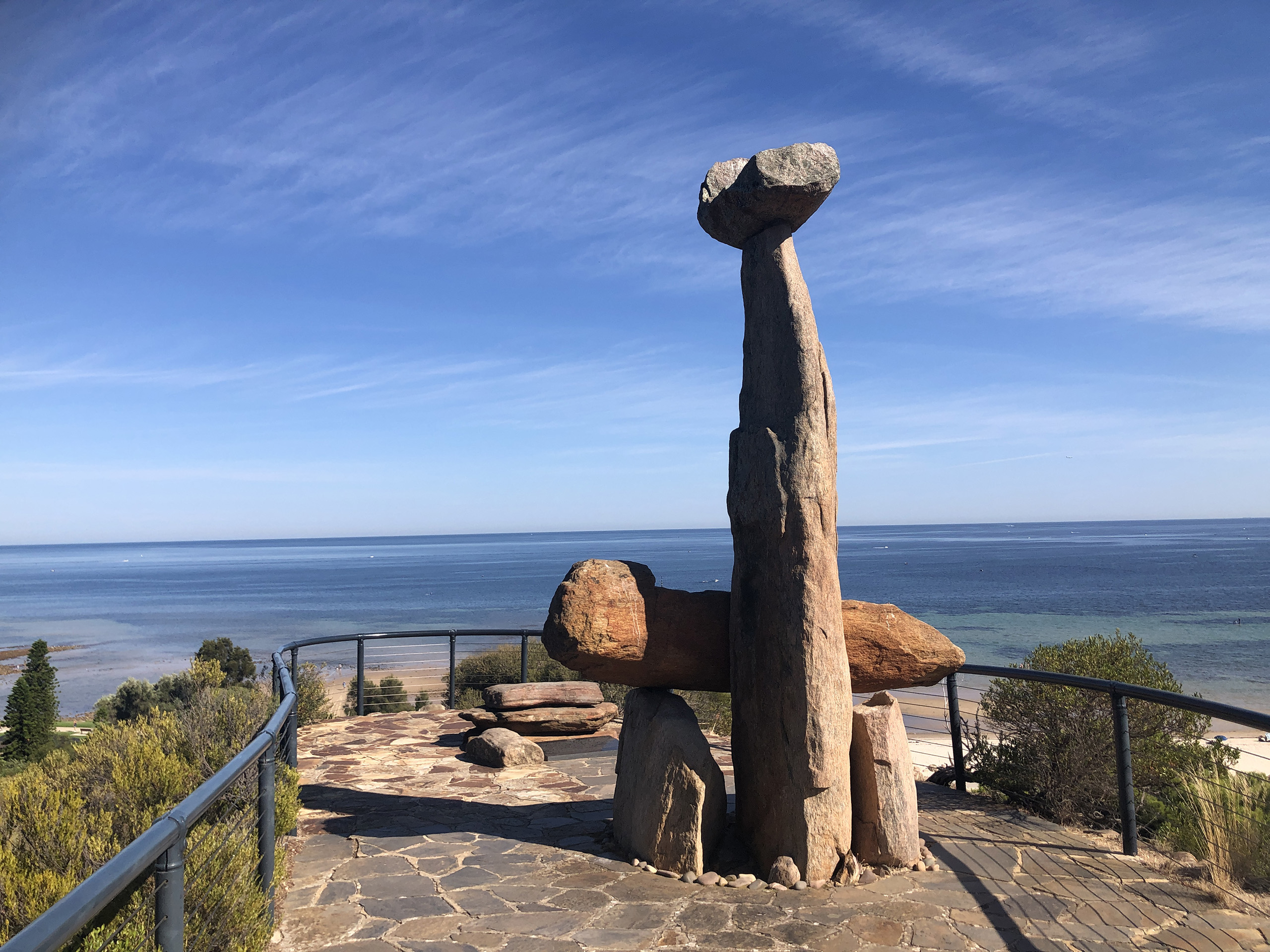
He also helped establish one of Adelaide's earliest pieces of Aboriginal cultural tourism infrastructure, co-founding the committee behind the Tjilbruke Dreaming Track."The Tjilbruke Monuments Committee was formed by Robert Edwards...John Dowie and staff of the Sunday Mail in 1971.
It was largely due to the efforts of Edwards and other non-Aboriginal people that drove the early promotion of Kaurna cultural tourism. A public appeal helped to fund the marking of the trail by plaques and sculptures, to pay homage to the Kaurna culture and to attract and educate tourists. In 1972 John Dowie created the sculpture know as the Tjilbruke Monument at Kingston Park...Cairns were created at significant points along the Tjilbruke Trail, articles and booklets were published in the 1980's, and the trail was included in Aboriginal Studies curricula."
Wikipedia, "Tjilbruke," accessed 2026.